
On April 12, 1961, humanity received news that changed history: Soviet pilot Yuri Alekseyevich Gagarin had completed the first manned flight into space. The flight lasted 108 minutes, the Vostok-1 spacecraft circled the Earth, and Gagarin’s name became the symbol of an entire epoch.
This is the official version-documented, confirmed by international observation, and recorded in the history of science.
But behind this version, as with many other USSR achievements, a shadow of doubt lingers.
The USSR did not invite foreign observers, did not allow foreign press, and did not show the preparation or the launch. Everything happened under strict secrecy. Even the closest allies learned about the launch from official announcements hours later.
Only after Gagarin’s successful return did the footage appear-neat, beautiful, staged. It was later revealed that many of these shots were filmed after the flight, specifically for the chronicle.
For the Soviet people of that time, this was not strange-the country lived in a world of staging and censorship. But from a common-sense perspective, such secrecy breeds doubt. Why, if this was a step for all humanity, was everything done so secretly?
Today, historians and technical specialists are certain: the Vostok-1 spacecraft truly orbited the Earth. Radio signals from it were received in various countries, and the United States officially acknowledged the flight.
The Soviet Union at that time possessed the necessary technology-before Gagarin, satellites, animals, and even dummies were launched in the same capsules.
However, distrust remains in society. Many who lived in the USSR saw how easily the authorities substituted the truth with the myth they needed. And even if the flight was real, everything surrounding it was turned into a performance.
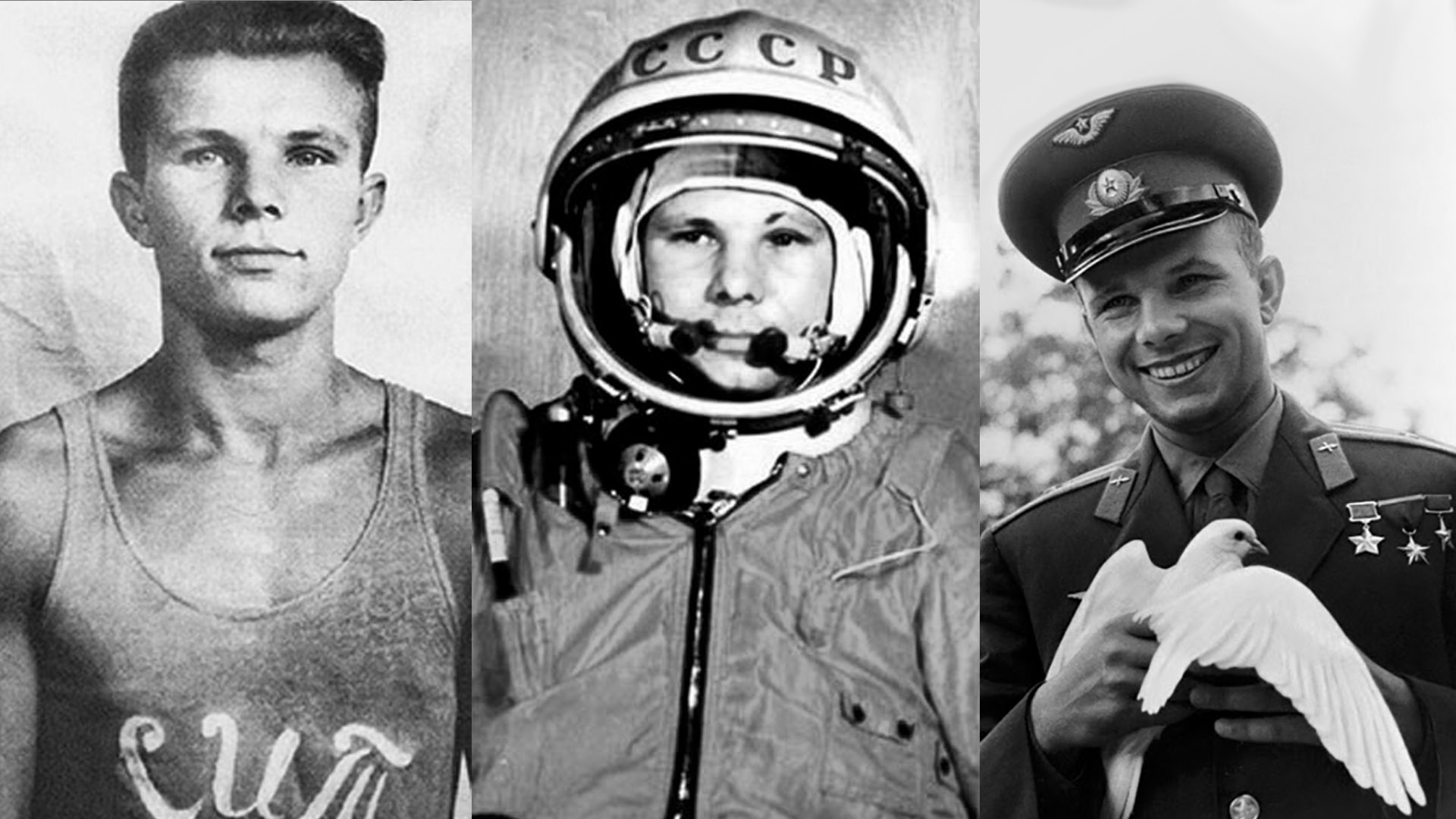
Gagarin was no longer a man but an ideal image-the "smile of socialism."
After his flight, Gagarin became the symbol of Soviet triumph. He was taken on tours around the world, shielded from ordinary life, guarded, yet-not allowed to be himself.
The years after the flight were difficult for him. He yearned for the sky, wanting to fly again, but the leadership took no risks-the "first" could not be lost. Rumors surfaced about depression, drinking, and internal weariness.
The USSR loved dead heroes. Lenin, Chkalov, Pavlik Morozov-the Soviet pantheon of glory always contained more dead than living. And when Gagarin died in 1968 during a test flight in a MiG-15UTI, it felt like too "convenient" a death to many.
The official version: collision with the wake turbulence from a passing Su-15.
But the details of the investigation were kept secret for decades. Witnesses vanished, documents disappeared, and the declassified reports offered no clarity. Even in 2013, when the issue was revisited, the explanation seemed strained-and came under the authority of a former KGB officer.
Many people retained their initial opinion: Gagarin's death was not accidental. Perhaps he became an inconvenient witness, too honest a man for a system where honesty was not welcome.
Gagarin was most likely truly in space.
But it is equally true that his life, his death, and the very story of his flight were rewritten by the authorities, edited to fit an ideological template.
The USSR could not allow a real person with doubts, with character, with weariness-to remain just a man. It needed a myth. And that myth lives on to this day-the smiling face on posters, in songs, in bronze.
But behind it lies a living person whom the system first placed on a pedestal and then left without the right to the truth.
This story is not just about Gagarin.
It is about a time when truth was valued less than a beautiful legend. And those who lived in the USSR know this better than anyone else.





 Welcome!
Comments