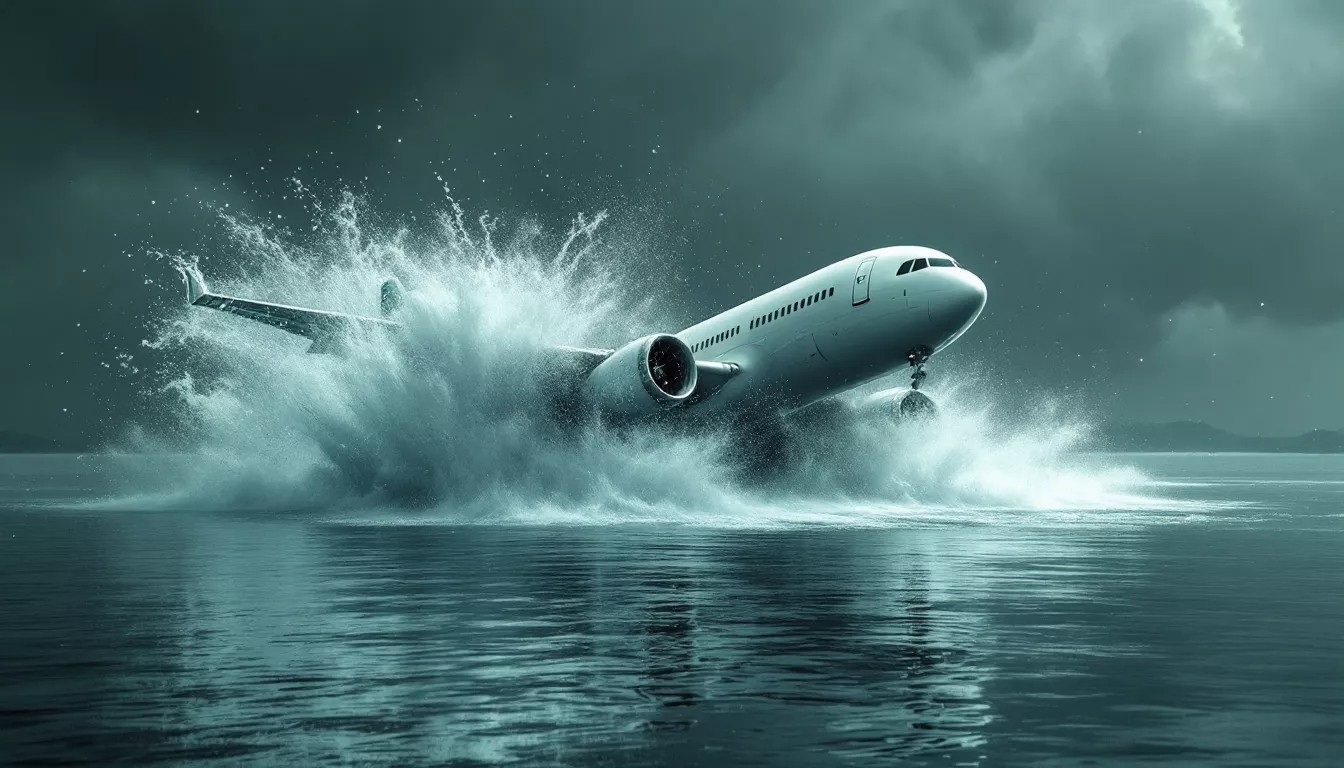
The Bermuda Triangle has become one of the most iconic modern mysteries — a place where planes vanish, ships disappear, and explanations are never straightforward. On the map, however, it’s simply a stretch of ocean bordered by Miami, Bermuda, and Puerto Rico. Nothing marks it as unusual except the stories we’ve attached to it.
Official organizations - including the U.S. Navy and the Coast Guard - do not consider this region more dangerous than any other heavily traveled part of the Atlantic. But the legend persists because real accidents, combined with dramatic storytelling, make the Triangle feel supernatural.
The idea of a “cursed” region didn’t come from ancient sailors - it came from mid-20th-century writers who collected unrelated incidents and tied them together under one dramatic label. Their books, articles, and newspaper features transformed ordinary tragedies into a single mysterious narrative.
And once a mystery captures public imagination, it rarely fades.
In December 1945, a group of five U.S. Navy training aircraft took off from Florida for a routine navigation exercise. Something went wrong: the flight leader misidentified his position, believed his compasses had failed, and led the entire formation farther into the open ocean.
When their fuel ran out, the planes went down one by one.
Complicating the story, a rescue seaplane dispatched to look for them also vanished - but that model had a known issue with fuel-tank vapor explosions.
What sounded like paranormal activity was, in reality, human error combined with bad luck and aging aircraft.
A massive Navy collier carrying over 300 people disappeared in 1918 on its way from the Caribbean to the U.S. No distress call, no debris, nothing.
Later research suggested the ship was overloaded and structurally weakened. A strong storm could have caused a catastrophic breakup, making it sink almost instantly.
The famous “ghost ship” wasn’t even found inside the Bermuda Triangle.
But its eerie vibe fit the narrative so perfectly that authors started adding it to Triangle lore - even though it’s unrelated.
Strip away the supernatural, and the region becomes easier to understand:
More ships and planes automatically mean more recorded accidents.
Tropical storms and sudden squalls are common - especially dangerous for older vessels.
The natural shift in Earth’s magnetic field can cause compasses to deviate slightly, confusing pilots before the GPS era.
The Gulf Stream can disperse wreckage quickly, making it appear as if nothing was ever there.
Gas escaping from the sea floor can temporarily reduce water density.
A ship caught in such a “pocket” can lose buoyancy rapidly - no magic required.
Because mystery sells.
Because unexplained tragedies feel more meaningful when they have a story attached.
Because humans love patterns, even when none exist.
The Bermuda Triangle is not a supernatural trap - it’s a combination of dangerous weather, navigational mistakes, and high traffic density, wrapped in decades of speculation and myth-making.





 Welcome!
Comments